

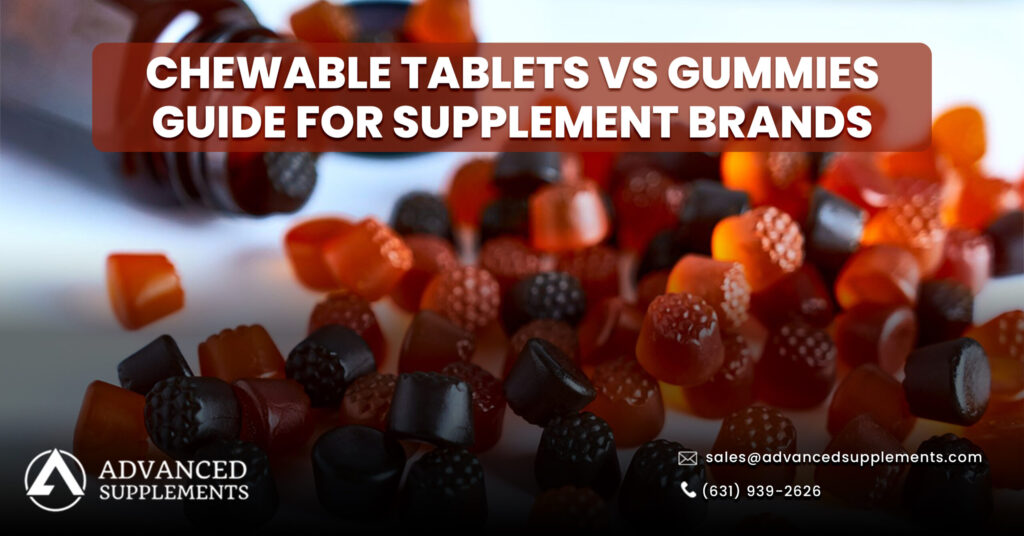
Brand owners face a critical decision when selecting between chewable tablets and gummies for their supplement products. This choice significantly impacts manufacturing costs, nutrient potency, shelf stability, and consumer satisfaction.
The dietary supplement market continues evolving rapidly, with alternative dosage forms gaining popularity among consumers who struggle with traditional pills. Both formats offer solutions for pill-averse consumers, yet they differ dramatically in manufacturing processes, nutrient capacity, stability profiles, and cost structures.
Contact Advanced Supplements today to create your custom supplement product.
“Chewable tablets and gummies offer different benefits for supplement brands, with key gaps in potency, stability, cost, and sugar content.”
Understanding Chewable Tablet Manufacturing
Chewable tablets are compressed supplements designed to be chewed rather than swallowed whole. They combine the manufacturing advantages of traditional tablets with enhanced palatability and ease of use. Working with professional supplement manufacturers ensures proper formulation and production quality.
The direct compression manufacturing process creates chewable tablets without heat exposure, protecting temperature-sensitive nutrients like probiotics, B-vitamins, and vitamin C. According to Pharmaceutical Technology research, this cold-compression method preserves ingredient integrity while delivering tablets that dissolve through mechanical chewing action.
Modern tablet manufacturing uses three primary methods: direct compression for simple formulations, wet granulation for complex blends requiring enhanced binding, and dry granulation for moisture-sensitive ingredients. The compression process allows manufacturers to achieve up to 50% nutrient density by weight in chewable tablets, enabling delivery of therapeutic dosages in convenient serving sizes.
How Gummy Supplement Manufacturing Works?
Gummy supplements combine vitamin powders with gelatin or pectin bases, creating chewy, candy-like products. The manufacturing process involves heating ingredients to 140-180°F to create a gel matrix, pouring the mixture into molds, cooling to set the shape, and coating with finishing agents.
This heat-intensive process inherently limits what gummies can deliver. Creating proper texture requires significant space for gelatin, corn syrup, sugar, and stabilizers. Research shows that gummies typically achieve only 10% active ingredients by weight because the gel matrix occupies most of the gummy volume.
Temperature sensitivity during production degrades heat-sensitive nutrients. Understanding gummies vs capsules differences helps consumers appreciate these trade-offs. The sticky gel texture that makes gummies appealing also creates stability challenges, as moisture within the gummy matrix accelerates nutrient degradation through hydrolysis reactions.
Nutrient Capacity and Dosing Comparison
The physical limitations of gummy supplements create significant problems for nutrient delivery. According to research from ConsumerLab, gummies contain 60-70% less active ingredients compared to equivalent chewable tablet supplements due to formulation constraints.
A two piece chewable multivitamin gives 5 calories, 2g carbs, under 1g sugar, and over 100 percent of key vitamins. The same gummy serving gives 15 calories, 4g carbs, 2g sugar, and under 60 percent of most vitamins. Chewables hold more nutrients because compression packs higher doses. Gummies often vary in strength, but chewables stay consistent with precise compression.
Sugar Content and Health Implications
Sugar content in gummy vitamins creates serious health concerns for brand positioning and consumer wellness. Most gummy products contain 2-8 grams of sugar per serving, which accumulates quickly when consumers take multiple supplement types daily.
The American Heart Association recommends women limit total sugar intake to 25 grams daily and men to 36 grams. Taking three different gummy supplements throughout the day could consume 15-20 grams of sugar just from supplements before eating any food.
Sugar-free gummies substitute sugar with alternatives like sugar alcohols or citric acid. However, these replacements create different problems. Sugar alcohols commonly cause digestive distress including bloating, gas, and diarrhea in many consumers. Citric acid erodes tooth enamel, increasing cavity risk even without sugar present.
Chewable tablets typically contain minimal sugar, often less than 1 gram per serving. Sweetness comes primarily from alternative sweeteners like stevia, monk fruit extract, or xylitol in amounts that provide palatability without significant caloric impact or dental concerns.
Stability and Shelf Life Differences
Nutrient stability varies dramatically between formats, directly impacting product quality and brand reputation. The moisture present in gummy matrices accelerates nutrient degradation through chemical reactions that break down vitamins and minerals over time.
According to pharmaceutical stability studies, gummy vitamins lose 20-40% of their potency within 6-12 months even when stored under recommended conditions. Chewable tablets maintain 90-95% potency for 2-3 years under similar storage because the dry compressed format protects ingredients from moisture, oxygen, and temperature fluctuations.
Gummies made with gelatin can melt and lose their shape when exposed to temperatures above 90°F. When cooled, they may turn into sticky lumps that become difficult to consume. Chewable tablets remain stable at temperatures up to 140°F, maintaining their structure and potency even during shipping in non-climate-controlled environments.
Manufacturers often overfill gummies with extra nutrients trying to compensate for expected degradation. However, this creates inconsistency problems. Fresh bottles might contain excessive amounts that could cause side effects, while older bottles fall below labeled claims. Chewable tablets avoid this issue through superior inherent stability.
Manufacturing Cost and MOQ Considerations
Production economics significantly impact brand profitability and market entry feasibility. Gummy supplement manufacturing requires specialized equipment, expensive gelatin systems, sugar processing, and complex quality control that increases costs substantially.
The minimum order quantity for chewable tablets typically ranges around 4,100 bottles for initial production runs. In contrast, gummy supplements require MOQs as high as 30,000 bottles, though some manufacturers may lower this to 10,000 bottles minimum. This difference creates major barriers for emerging brands testing market demand.
Manufacturing timelines differ notably as well. Working with a custom supplement manufacturer for tablet development and production typically requires 8-12 weeks from formulation approval to finished goods delivery. Gummy manufacturing timelines extend 12-16 weeks due to additional steps including gel formation, cooling, coating, and moisture equilibration before packaging.
Per-unit production costs for gummies run 30-50% higher than equivalent chewable tablets because of ingredient expenses, longer production cycles, specialized equipment requirements, and higher labor needs. Understanding variables that impact contract manufacturing vs contract packaging helps optimize formulation decisions.
Flavor Development and Taste Masking
Creating pleasant-tasting products requires different approaches for chewable tablets versus gummies. Both formats need flavor systems that mask bitter ingredients while providing enjoyable sensory experiences that encourage compliance.
Gummy formulations integrate flavoring agents directly into the gel matrix during heating. This process allows thorough flavor distribution but limits options because high temperatures degrade many natural flavoring compounds. Artificial flavor systems tolerate heat better but may not align with clean-label positioning strategies.
Chewable tablet flavoring happens during compression without heat exposure, preserving delicate natural flavor compounds. Similar to powder manufacturing, dry powder flavoring systems get mixed with active ingredients before compression, allowing precise control over flavor intensity and profile.
Target Market Considerations
Understanding target demographics helps brand owners select formats aligning with consumer preferences and market positioning. Children aged 2-12 typically prefer gummy supplements because the candy-like format feels familiar and enjoyable. However, parents increasingly concerned about sugar intake may seek lower-sugar alternatives like chewable tablets.
Teenagers and young adults show mixed preferences. Those focused on serious fitness or health goals often prefer chewable tablets for higher potency and lower sugar content. Middle-aged and elderly consumers frequently prioritize efficacy over taste, making chewable tablets attractive for this demographic.
Athletes and fitness enthusiasts typically demand maximum nutrient delivery in convenient forms. Chewable tablets deliver the high-potency formulations this market requires without excessive sugar that conflicts with dietary discipline. Learning how to find a supplement manufacturer helps develop products for specific demographics.
Quality Control and Regulatory Compliance
Manufacturing quality control differs significantly between formats, impacting product reliability and brand reputation. Chewable tablet manufacturing allows for precise weight control through automated compression equipment. Each tablet receives a measured amount of powder blend, creating tight consistency typically within 2-3% variation.
Gummy manufacturing involves more variables affecting final product quality. Temperature control, cooling rates, humidity levels, and mixing efficiency all impact how evenly nutrients distribute through the gel matrix.
Both formats must comply with FDA regulations governing dietary supplements. Chewable tablets must clearly indicate “chew before swallowing” on packaging to prevent choking hazards. Gummy supplements face scrutiny regarding their candy-like appearance and taste, requiring clear distinction from candy products.For those exploring alternative formats, understanding what effervescent tablets are and how they work provides additional dosage form options for specific applications.
Making the Strategic Format Decision
Selecting between chewable tablets and gummies requires evaluating multiple factors against brand objectives, target market preferences, and business resources. Consider these strategic questions:
Target Market Demographics: Children under 12 typically prefer gummies, while adults focused on efficacy favor chewable tablets. Multi-generational brands may need both formats.
Nutrient Potency Requirements: Therapeutic formulations requiring high-dose nutrients work better as chewable tablets. General wellness products with moderate dosing suit either format.
Budget and MOQ Constraints: Emerging brands with limited capital may find chewable tablet MOQs more accessible. Working with private label supplement manufacturers can help optimize production costs.
Brand Positioning: Premium health brands often choose chewable tablets to emphasize efficacy and clean formulation. Mass-market brands targeting convenience may prefer gummy appeal despite trade-offs.
Distribution Channels: E-commerce-first brands can manage gummy shipping challenges through climate-controlled logistics. Retail-focused brands may prefer chewable tablet stability for traditional distribution networks.
Shelf Life Requirements: Subscription models with faster product turnover tolerate gummy stability limitations better. One-time purchase models benefit from chewable tablet longevity that reduces returns and complaints.
Frequently Asked Questions
-
What is the main advantage of chewable tablets over gummies for supplements?
Chewable tablets deliver 50% nutrient density by weight compared to gummies at only 10%, allowing higher potency formulations with less sugar, better stability (2-3 year shelf life vs 6-12 months), and lower manufacturing costs enabling better profit margins for brands.
-
How do minimum order quantities compare between chewable tablets and gummies?
Chewable tablet MOQs typically start around 4,100 bottles while gummy supplements require 10,000-30,000 bottles minimum. This significant difference impacts capital requirements and market testing flexibility for emerging supplement brands launching new products.
-
Which format works better for children’s supplements?
Children aged 2-5 typically prefer gummies due to candy-like taste and texture. However, chewable tablets with optimized flavors work well for ages 6-12, offering better nutrition with less sugar while teaching children healthy supplement habits.
-
Do chewable tablets and gummies have similar bioavailability?
Research shows comparable bioavailability when comparing equal nutrient amounts, but practical effectiveness differs because gummies contain far less active ingredients per serving. Chewable tablets deliver therapeutic dosages more effectively due to higher nutrient concentrations.
-
How does heat exposure during manufacturing affect supplement quality?
Gummy manufacturing requires 140-180°F temperatures that degrade heat-sensitive nutrients like B-vitamins, vitamin C, and probiotics. Chewable tablet compression uses no heat, preserving all ingredient potency and enabling broader formulation possibilities for brand owners.