

Choosing between gummy vitamins and capsule supplements can dramatically impact your health outcomes and product effectiveness. The global gummy vitamin market exceeded $7 billion in 2022 and continues growing rapidly as consumers seek easier ways to take daily supplements.
However, popularity does not always equal effectiveness. Many brand owners and consumers make this choice based on taste alone without considering critical factors like nutrient stability, dosage accuracy, and long-term health implications. This guide explains the complete picture so you can make informed decisions that truly support wellness goals.
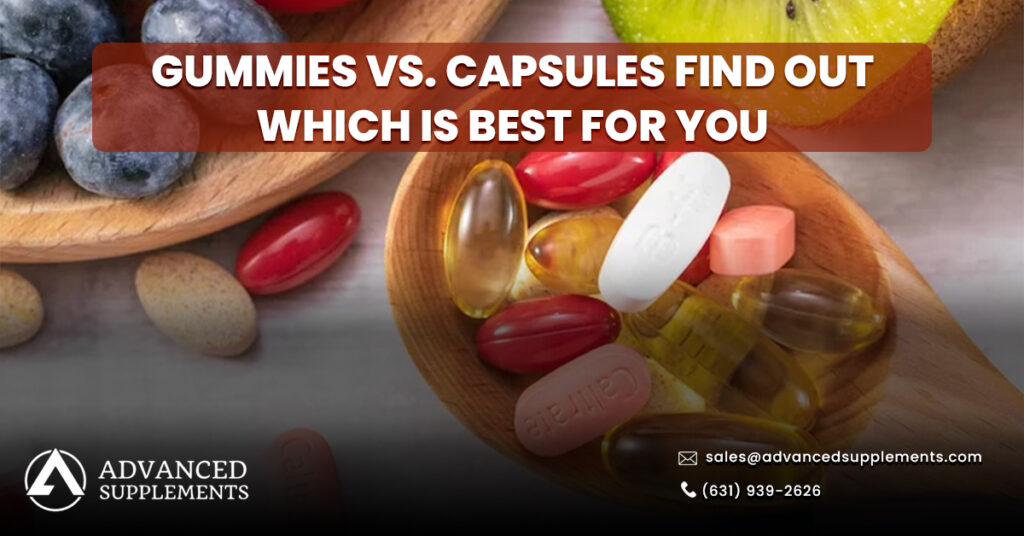
Gummy vitamins taste great and are easy to take, but they usually contain less nutrients, more sugar, and lose potency faster. Capsules deliver higher doses, stay stable longer, contain no sugar, and cost less to produce. Gummies may work for kids or people who can’t swallow pills, but capsules are the better choice for adults who want reliable, effective supplementation.
Understanding Gummy Vitamins and How They’re Made
Gummy vitamins emerged in the late 1990s to help children who struggled swallowing pills. Manufacturers combine vitamin powder with water, then create a gel base using gelatin, corn starch, sugar, and glucose. This mixture gets poured into molds, cooled, and coated with additional sweeteners or acids.
The manufacturing process inherently limits what gummies can deliver. Creating that chewy texture requires significant space for gelatin, sweeteners, binding agents, and flavor systems. These necessary ingredients take up room that could otherwise hold active nutrients. Most gummies provide lower nutrient concentrations compared to traditional supplements because of these physical constraints.
According to research from ConsumerLab testing, many gummy products do not actually contain the vitamin amounts listed on their labels. The gel matrix makes it difficult to distribute nutrients evenly throughout each piece, leading to inconsistent dosing between individual gummies.
What Makes Capsule Supplements Different?
Capsule manufacturing uses a completely different approach that prioritizes nutrient delivery over taste. Capsules consist of a gelatin or plant-based shell filled with powdered ingredients. This design protects active compounds from oxygen and moisture while maximizing the amount of nutrients that fit in each dose.
The first gelatin capsule patent dates back to 1834, and this delivery format has been refined over nearly two centuries. Modern supplement manufacturers can now produce capsules with precision filling equipment that ensures consistent dosing in every unit. This reliability matters significantly for people taking supplements to address specific health concerns.
Capsules bypass the taste issue entirely since you swallow them whole. The shell dissolves quickly in your digestive system, releasing ingredients for absorption. This allows manufacturers to include ingredients with unpleasant flavors or those that degrade when exposed to air, heat, or light during the extended manufacturing process required for gummies.
Nutrient Content and Dosage Accuracy Comparison
The physical limitations of gummy supplements create real problems for nutrient delivery. Research shows gummies typically contain 60-70% less active ingredients compared to equivalent capsule supplements. This occurs because sugar, gelatin, and stabilizers occupy most of the gummy volume.
For example, a typical gummy multivitamin might contain 15-20 nutrients at reduced dosages. A comparable capsule multivitamin can pack 40-50 nutrients at therapeutic levels because powdered ingredients take up far less space than gel matrices. When you need specific amounts for health benefits, this difference becomes crucial.
Dosage consistency represents another significant concern with gummy formulations. According to Cleveland Clinic medical research, tests repeatedly show individual gummies from the same bottle contain varying nutrient amounts. Some pieces have more than labeled while others contain significantly less. Capsules maintain much tighter consistency because automated filling equipment delivers precise amounts.
Sugar Content and Health Implications
Sugar content in gummy vitamins creates serious health concerns that many consumers overlook. Most gummy products contain 2-8 grams of sugar per serving, which seems small until you consider the American Heart Association recommends women limit total sugar intake to 25 grams daily and men to 36 grams.
Taking multiple gummy supplements throughout the day quickly adds up. If you take a multivitamin, vitamin D, and omega-3 gummies as many people do, you could consume 15-20 grams of sugar just from supplements before eating any food. This contributes to obesity, diabetes, and heart disease risks over time.
Sugar-free gummies substitute sugar with alternatives like sugar alcohols or citric acid. However, these create different problems. Sugar alcohols commonly cause digestive distress including bloating, gas, and diarrhea in many people. Citric acid erodes tooth enamel, increasing cavity risk and tooth sensitivity even without sugar present.
The sticky gummy texture compounds dental problems. Gummies adhere to teeth surfaces much like candy, allowing sugar and acids to damage enamel for extended periods. Brushing immediately after eating gummies helps, but most people take supplements with breakfast and brush beforehand.
Stability and Shelf Life Differences
Nutrient stability varies dramatically between gummy and capsule formats. The moisture present in gummy matrices accelerates nutrient degradation through hydrolysis reactions. Heat-sensitive vitamins like C, B-complex, and certain probiotics break down rapidly in gummy products.
According to studies published in pharmaceutical journals, gummy vitamins lose 20-40% of their potency within 6-12 months even when stored properly. Capsules maintain 90-95% potency for 2-3 years under the same storage conditions. This stability difference means gummies become increasingly ineffective as they age on shelves or in your cabinet.
Manufacturers often overfill gummies with extra nutrients trying to compensate for degradation. However, this creates problems too. Fresh bottles might contain excessive amounts that could cause side effects, while older bottles fall below labeled claims. Capsules avoid this issue through superior stability that maintains consistent dosing throughout shelf life.
Understanding stability testing in supplement manufacturing helps explain why capsules provide more reliable nutrient delivery over time. The dry powder environment inside capsule shells protects ingredients from moisture, oxygen, and temperature fluctuations that degrade gummy formulations.
Bioavailability and Absorption Rates
Both gummies and capsules show similar bioavailability when nutrients are measured in controlled studies. Your body absorbs vitamins and minerals effectively from either format when formulations are properly designed. The gel matrix in gummies does not enhance absorption despite marketing claims suggesting otherwise.
However, this equal bioavailability assumes you actually take the supplements consistently. Research indicates people are more likely to remember and take gummy supplements regularly because they taste pleasant. This compliance advantage could theoretically offset other limitations if taste is your main barrier to supplement use.
Capsules offer advantages for targeted delivery that gummies cannot match. Delayed-release capsules protect acid-sensitive ingredients like probiotics until they reach the intestines. Enteric coatings allow nutrients to bypass stomach acid entirely. These specialized delivery mechanisms dramatically improve effectiveness for certain ingredients but are impossible with gummy formulations.
Manufacturing Quality Control Challenges
Quality control during manufacturing reveals another significant difference. Working with professional capsule manufacturers allows for precise formulation control and testing throughout production. Automated systems fill capsules with tight weight tolerances, typically within 2-3% variation.
Gummy manufacturing involves more variables that affect final product quality. Temperature control, cooling rates, humidity levels, and mixing efficiency all impact how evenly nutrients distribute through the gel. Even small variations create inconsistencies between batches and within individual units.
Testing poses challenges too. Extracting nutrients from gummy matrices for analysis requires more complex procedures compared to testing capsule contents. This makes verification more difficult and expensive, which can discourage manufacturers from conducting thorough quality checks on finished products.
Cost Considerations for Brand Owners and Consumers
From a business perspective, gummy supplements typically cost more to manufacture than capsules. The gelatin base, sugar, flavoring systems, and specialized equipment increase production expenses significantly. These higher costs get passed to consumers through elevated retail prices.
Capsule manufacturing offers better economies of scale for brands. The simpler production process, longer shelf life, and ability to pack more nutrients per unit create better value propositions. Understanding variables that impact manufacturing costs helps brand owners make strategic decisions about which formats to offer their customers.
Consumers end up spending more with gummies because you typically need to take multiple pieces to match the nutrient content of a single capsule. A bottle of gummy vitamins might last 30 days if you follow serving suggestions, while an equivalent capsule product could last 60-90 days depending on the formulation.
Who Should Choose Gummies vs Capsules?
Gummy vitamins work well for specific situations despite their limitations. Children who absolutely refuse to swallow pills may benefit more from gummy vitamins than no supplementation at all. The key is recognizing gummies as a compromise rather than an optimal choice.
People with severe dysphagia or other swallowing disorders might find gummies easier than capsules. However, chewable tablets or liquid supplements often provide better alternatives for these individuals without the sugar content and dosage inconsistencies that plague gummies.
For most adults seeking serious health benefits from supplementation, capsules remain the superior choice. They deliver higher nutrient concentrations, maintain potency longer, avoid added sugars, and cost less per serving. The lack of taste becomes a non-issue when you swallow them quickly with water.
Brand owners developing supplement lines should consider their target market carefully. Capsules appeal to health-conscious consumers who prioritize effectiveness over taste. Gummies work for casual supplement users more interested in convenience than optimal nutrition.
Making the Right Choice for Your Needs
Several factors should guide your decision between gummy and capsule supplements. Consider your health goals first. Are you addressing specific deficiencies or health conditions? Capsules provide the therapeutic dosages necessary for meaningful results.
Think about your dietary habits too. If you already consume significant sugar from food and beverages, adding gummy supplements pushes you further above recommended limits. Capsules let you supplement without compromising other dietary goals.
Evaluate your consistency patterns honestly. Will you remember to take supplements if they do not taste pleasant? Some people genuinely benefit from the palatability advantage gummies offer, even though capsules provide superior nutrition.
Review product labels carefully regardless of format. Look for third-party testing certifications from organizations like NSF or USP that verify label accuracy. Check ingredient lists for unnecessary additives, artificial colors, or allergens. Compare active ingredient amounts to determine actual value rather than just looking at bottle prices.
Frequently Asked Questions
-
Do gummy vitamins work as well as capsules for nutrient absorption?
Bioavailability is similar when measured in controlled conditions, but gummies contain significantly less active ingredients and suffer from potency degradation over time, making capsules more effective overall.
-
How much sugar is in gummy vitamins compared to capsules?
Gummy vitamins typically contain 2-8 grams of sugar per serving while capsules contain zero sugar, making capsules the better choice for people monitoring sugar intake or dental health.
-
Why do gummy vitamins cost more than capsule supplements?
Manufacturing gummies requires specialized equipment, expensive gelatin and sweetener systems, and complex quality control, increasing production costs that get passed to consumers through higher retail prices.
-
Can children take capsule vitamins instead of gummies?
Yes, many children age 6 and older can swallow small capsules with practice. Chewable tablets offer a middle ground providing better nutrient content than gummies without swallowing difficulties.
-
Which supplement format has the longest shelf life?
Capsule supplements maintain 90-95% potency for 2-3 years while gummy vitamins lose 20-40% potency within 6-12 months due to moisture and heat sensitivity in gel formulations.