

The creatine supplement market hit $1 billion in 2024. Projections show growth to $2.8 billion by 2030. Athletes worldwide depend on this performance enhancer. Fitness enthusiasts swear by its results. Yet most supplement brand owners struggle to explain what actually happens inside manufacturing facilities.
Understanding how creatine monohydrate powder gets made matters for business decisions. The manufacturing process determines product purity, customer satisfaction, and brand reputation. Quality control separates pharmaceutical-grade supplements from contaminated products that generate complaints and returns.
Partnering with an experienced creatine supplement manufacturer ensures products meet industry standards. This guide examines the complete production process, from chemical synthesis through final packaging. Brand owners gain practical insights into quality protocols, testing requirements, and certifications that differentiate premium products from cheap alternatives.
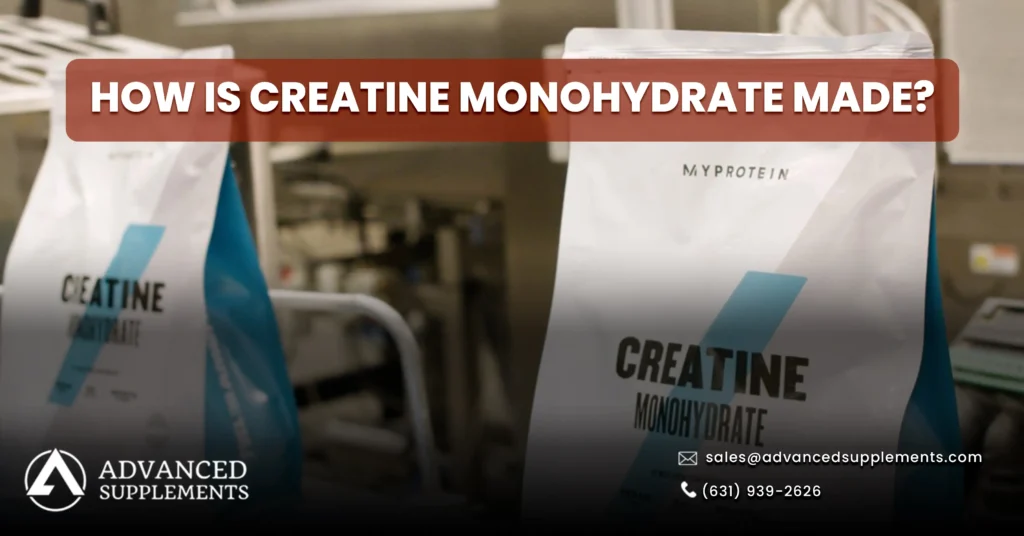
Creatine monohydrate is manufactured through a controlled chemical synthesis using sodium sarcosinate and cyanamide. This guide explains how creatine powder is made, its chemical formula, purification steps, quality standards, and why pharmaceutical-grade manufacturing matters for performance and safety.
How Is Creatine Monohydrate Made?
Creatine monohydrate production starts with two industrial chemicals: sodium sarcosinate and cyanamide. These compounds undergo controlled reactions that create the creatine molecule athletes rely on for performance enhancement.
The human body naturally synthesizes creatine from three amino acids. L-arginine, glycine, and L-methionine combine in the liver, kidneys, and pancreas. This produces roughly 1 gram daily, which stores in muscle tissue to fuel explosive movements.
But there’s a significant gap here.
Athletes training intensely require 5-8 grams daily for optimal performance benefits. Natural production can’t meet this demand. Dietary sources? Even less practical. Obtaining adequate creatine from food alone means consuming several pounds of beef or fish every day. Nobody maintains that approach consistently.
Research published in the Journal of the International Society of Sports Nutrition demonstrates that creatine benefits for men include improved strength, power output, and muscle recovery. The evidence base includes over 1,000 peer-reviewed studies supporting efficacy and safety.
Creatine Monohydrate Ingredients: The Raw Materials Explained
Understanding the Creatine Monohydrate Chemical Formula
The creatine monohydrate chemical formula reads as C₄H₁₁N₃O₃. This represents four carbon atoms, eleven hydrogen atoms, three nitrogen atoms, three oxygen atoms, plus one water molecule. The molecular structure enables creatine to function effectively in muscle cells’ energy production pathways.
Nitrogen atoms form an amidino group. Oxygen atoms create an acidic component. These structural elements work together, facilitating creatine’s role in regenerating ATP during high-intensity muscle contractions. Understanding this chemistry helps explain why creatine works the way it does.
Sodium Sarcosinate and Cyanamide: The Primary Compounds
Sodium sarcosinate derives from glycine, an amino acid, and provides the structural backbone for creatine molecules. This organic compound plays a critical role as an amino acid intermediate in metabolism. Pharmaceutical-grade specifications require extensive purity testing before materials enter production environments.
Quality creatine manufacturers reject substandard raw materials regardless of cost advantages. The purity of sodium sarcosinate directly affects final product quality. Suppliers must provide certificates of analysis documenting composition and contaminant levels.
Cyanamide functions as the reactant completing the synthesis process. This organic compound, widely used in agriculture and chemical manufacturing, differs completely from toxic cyanide. Industrial cyanamide undergoes rigorous quality control testing to verify purity before entering production facilities.
Choline and cyanamide exist as separate compounds in industrial chemistry. Manufacturers source these raw materials from certified suppliers who maintain strict quality standards and testing protocols.
Demystifying the Manufacturing Process: How Creatine Monohydrate Powder Gets Made
Step One: Chemical Synthesis Through Controlled Reactions
Production begins in specialized chemical reactors. Sodium sarcosinate and cyanamide combine under precisely monitored conditions. Temperature climbs to 100-150 degrees Celsius. Pressure reaches carefully calibrated levels.
Temperature control represents a critical parameter throughout synthesis. Miss the target by just a few degrees? The batch develops unwanted byproducts. Purity suffers. Quality drops.
Catalyst compounds accelerate the bonding process between raw materials. The chemicals react and transform into liquid creatine. This synthesis step determines whether the final product meets pharmaceutical specifications or falls short of quality standards.
Step Two: Crystallization Creates Pure Creatine
After synthesis completes, the liquid solution enters controlled cooling. Temperature decreases gradually over several hours. As this happens, creatine monohydrate crystals form within the solution.
The mixture becomes supersaturated during this cooling phase. Pure creatine solidifies while impurities stay dissolved in the liquid. It’s chemistry-based purification that doesn’t require complex filtration equipment.
Crystal size depends on cooling rate precision. Experienced creatine suppliers employ gentle agitation techniques ensuring uniform crystal development throughout each batch. Rushing this step creates inconsistent products. Dissolution characteristics vary. Customers notice the difference in how the powder mixes.
Step Three: Centrifugation Removes Remaining Impurities
The crystal-containing mixture transfers to high-speed centrifuges. Centrifugal force separates solid creatine crystals from liquid impurities. This removes unwanted compounds like dicyandiamide effectively.
Quality facilities implement multiple centrifugation cycles. Single-pass processing doesn’t achieve pharmaceutical-grade purity standards. Testing occurs at this checkpoint. Batches failing specifications get reprocessed or discarded entirely.
The economics of rejecting failed batches beat the costs of quality issues reaching the market. Contaminated products generate customer complaints, negative reviews, and potential regulatory problems.
Step Four: Vacuum Drying Preserves Molecular Integrity
Wet creatine crystals move immediately into vacuum drying systems. The vacuum environment removes moisture at relatively low temperatures. This prevents thermal degradation that damages molecular structure.
Research from the National Center for Biotechnology Information shows proper drying techniques prevent conversion to creatinine, the metabolically inactive form. Customers don’t get performance benefits from creatinine. Results come from intact creatine monohydrate molecules.
Moisture removal ensures extended shelf-life stability. Vacuum systems simultaneously prevent oxidation during drying, protecting creatine from environmental factors that reduce efficacy over time.
Step Five: Milling Creates Fine Powder Consistency
Dried crystals undergo processing through industrial milling equipment. Particle size reduces to approximately 200 mesh fineness. This fine powder consistency offers multiple benefits.
Dissolution improves dramatically. Mixing characteristics enhance. Absorption rates increase compared to coarser particles. For powder supplements, this consistency creates superior user experience. The product blends smoothly without leaving gritty residue.
Tablet formulations may require different particle specifications based on compression requirements. But for most applications, fine powder represents the optimal consistency for creatine supplements.
Is Creatine Made From Animals? Clarifying Production Methods
No. Modern creatine production relies exclusively on synthetic chemical processes. Animal-derived materials don’t appear anywhere in the manufacturing process. No byproducts from animal sources get used.
This manufacturing approach makes creatine suitable for formulations targeting vegan and vegetarian consumers. Historical extraction methods from animal tissue proved commercially impractical decades ago. Costs ran too high. Purity levels varied inconsistently from batch to batch.
Synthetic production delivers superior results on every metric: consistency, verified purity, economic efficiency, and scalability. Supplement brands can confidently market creatine products as plant-based compatible. Working with a qualified creatine manufacturer USA ensures proper documentation supporting these claims.
Does Creatine Have Sodium? Understanding Mineral Content
Sodium sarcosinate contains sodium during the initial synthesis stages. But here’s what matters for finished products: comprehensive washing and purification protocols remove virtually all sodium before packaging.
Quality creatine monohydrate typically contains less than 10mg of sodium per 5-gram serving. That’s negligible for most dietary contexts. Athletes monitoring sodium intake can supplement with creatine without concern about significant sodium consumption.
Third-party laboratories verify mineral content during quality control testing. This ensures finished products meet label claims and satisfy regulatory disclosure requirements for mineral content. Certificates of analysis document these test results for each production batch.
Rigorous Quality Control: Testing Standards That Matter
Identity and Potency Testing Through HPLC Analysis
Every production batch undergoes High-Performance Liquid Chromatography analysis. This analytical technology measures precise creatine concentration while identifying potential contaminants such as creatinine or synthesis byproducts.
Standards established by the U.S. Pharmacopeia specify that pharmaceutical-grade creatine must consistently achieve 99%+ purity. That’s not a suggestion. It represents the baseline for quality manufacturing operations.
Laboratories verify chemical identity through multiple testing methodologies. This ensures finished products contain authentic creatine monohydrate rather than alternative compounds, adulterants, or degradation products that compromise effectiveness.
Microbiological Testing for Safety Compliance
Specialized laboratories conduct comprehensive microbiological screening. E. coli gets tested. Salmonella gets screened. Other potentially harmful bacteria get identified before products reach consumers.
The FDA establishes strict limits for total bacterial counts in dietary supplements. Maintaining sterile production environments helps prevent contamination. Quality protocols address microbial risks during processing and storage phases.
Regular environmental monitoring verifies cleanliness standards. Product testing confirms safety throughout the manufacturing lifecycle. These procedures aren’t optional for quality-focused operations.
Heavy Metal Screening Protects Consumer Health
Comprehensive testing screens for toxic heavy metals: lead, mercury, cadmium, arsenic. These elements accumulate in biological systems and present serious health risks with chronic exposure.
Federal regulations establish maximum allowable levels. California Proposition 65 requires even stricter standards for products sold in that state. Quality manufacturers implement internal specifications exceeding minimum regulatory requirements.
Third-party laboratories conduct independent verification. Quality certificates accompany each production batch from reputable suppliers. This documentation supports label claims and provides protection against liability issues.
Manufacturing Certifications Demonstrate Quality Commitment
Good Manufacturing Practices certification indicates facilities follow pharmaceutical industry standards. These cover equipment maintenance, employee training, environmental controls, documentation practices.
Third-party auditing organizations conduct regular facility inspections. They verify ongoing compliance rather than just initial certification. This creates accountability ensuring standards get maintained consistently over time.
Hazard Analysis Critical Control Points systems identify potential contamination risks throughout production. Manufacturers monitor critical control points implementing preventive measures. This represents proactive quality management rather than reactive problem-solving after issues occur.
Selecting Manufacturing Partners for Supplement Brands
Prioritize partners offering verified 99%+ purity with comprehensive third-party testing documentation. Reputable manufacturers provide batch-specific certificates of analysis documenting purity levels, microbial testing results, heavy metal screening outcomes.
Investigate prospective manufacturing partners thoroughly. Verify GMP certification status through third-party databases. Evaluate facility capabilities during site visits. Assess quality management systems through documentation review.
Request facility tours for significant partnerships. Seeing operations firsthand reveals information documentation alone can’t convey. Equipment condition indicates maintenance practices. Employee training levels show commitment to quality. Facility organization reflects management priorities.
Working with an experienced creatine manufacturer who maintains transparent operations provides competitive advantages. Quality manufacturing partners become strategic assets supporting brand growth and market differentiation.
Advanced Supplements: Manufacturing Excellence
Advanced Supplements specializes in pharmaceutical-grade sports nutrition manufacturing. The facility maintains strict GMP compliance, implementing advanced quality control systems exceeding industry standards.
Services include contract manufacturing across multiple delivery formats: capsules, tablets, and powders. The formulation development team collaborates with brands optimizing creatine products for maximum effectiveness, stability, and consumer acceptance.
Third-party testing, complete batch tracking, and transparent documentation practices come standard with every project. Technical expertise and quality infrastructure support competitive positioning in demanding supplement markets.
Contact Advanced Supplements at (631) 939-2626 to discuss creatine manufacturing requirements or request detailed quotes for product development projects.
Frequently Asked Questions About Creatine Production
-
What happens if creatine gets exposed to heat during storage?
Heat degrades creatine into inactive creatinine. Store below 25°C (77°F) in cool, dry locations away from sunlight to maintain potency for 3-5 years.
-
How long does the complete manufacturing process take from start to finish?
Complete creatine production requires 5-7 days, including synthesis, crystallization, drying, milling, and quality testing before packaging and distribution.
-
Can creatine monohydrate manufacturing create environmental pollution?
Yes, improper manufacturing generates chemical waste. Responsible facilities use wastewater treatment and air filtration to comply with environmental regulations.
-
What causes the price difference between generic and premium creatine brands?
Price varies based on raw material purity, facility standards, testing protocols, and certifications like Creapure®. Premium brands invest more in quality control.
-
Does micronization change the chemical composition of creatine?
No, micronization only reduces particle size. The molecular formula (C₄H₁₁N₃O₃) stays identical, though dissolution and mixing characteristics improve significantly.
-
Can manufacturers add flavoring during the production process?
No, flavoring gets added during final formulation. Manufacturers produce pure, unflavored creatine monohydrate first to maintain ingredient purity and testing accuracy.
-
What testing identifies counterfeit or adulterated creatine?
HPLC analysis definitively identifies authentic creatine. Mass spectrometry and nuclear magnetic resonance spectroscopy detect adulterants like flour or maltodextrin.
-
How do manufacturers prevent cross-contamination with allergens?
Dedicated facilities prevent contamination by producing only creatine. Multi-product facilities use cleaning protocols, equipment segregation, and allergen testing.