

Selecting the right capsule size for your supplement brand directly impacts consumer experience, product effectiveness, and manufacturing costs. The global two-piece empty hard capsule market exceeded $2.8 billion in 2023 as brands recognize how capsule sizing affects customer satisfaction.
However, many brand owners choose capsule sizes based on guesswork rather than strategic analysis. This leads to products that are difficult to swallow, require too many pills per serving, or fail to deliver adequate dosages. Understanding capsule sizing principles helps you create products consumers love while optimizing profitability.
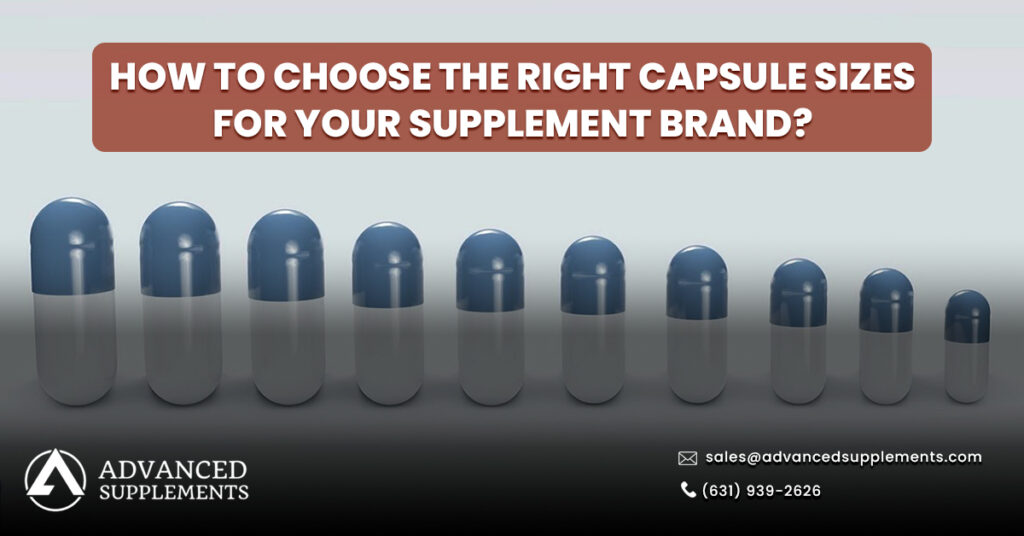
Capsule sizes range from 000, the largest at 1,000-1,370mg capacity, down to size 5, with size 00 (570-950mg) being the industry standard for most dietary supplements. The right size depends on powder density, required ingredient dosage, target consumer demographics, and manufacturing equipment compatibility, since the same capsule holds different weights depending on whether the fill is light, medium, or high-density material. Advanced Supplements helps brands calculate the correct size and validate it through fill consistency and swallowability testing before full production.
Selecting the right capsule size affects consumer satisfaction, manufacturing costs, and product effectiveness. This comprehensive guide explains how to choose perfect capsule sizes for your supplement brand based on powder density, target demographics, ingredient dosages, and market positioning strategies.
Understanding the Capsule Size Numbering System
Capsule sizes follow a reverse numbering system where larger numbers indicate smaller capsules. Standard sizes range from 000 (largest) to 5 (smallest). According to Capsuline’s sizing data, sizes 00 and 0 are most commonly used because they balance fill capacity with ease of swallowing.
Size 000 is the largest capsule for human consumption, measuring approximately 26.14mm in length and holding 1,000mg to 1,370mg depending on powder density. Sports nutrition brands frequently use this size for pre-workout formulas and high-dose amino acid products.
Size 00 capsules are the industry standard for dietary supplements. They measure about 23.30mm long and hold 570mg to 950mg based on ingredient density. Multivitamins, vitamin C, herbal blends, and general wellness formulas typically use size 00 capsules because they provide optimal balance.
Size 0 capsules measure approximately 21.70mm in length and accommodate 305mg to 680mg depending on formulation density. Pharmaceutical products and moderate-dose supplements often utilize this size when ingredients require less volume or markets prefer smaller capsules.
Sizes 1 through 5 progressively decrease in capacity. Size 1 holds 225mg to 500mg, size 2 holds 165mg to 370mg, while sizes 3, 4, and 5 are primarily reserved for specialized pharmaceutical applications or pediatric formulations requiring very small doses.
Ready to choose the perfect capsule size for your supplement brand? Advanced Supplements offers expert guidance and manufacturing solutions. Contact us today!
How Powder Density Affects Capsule Size Selection?
Powder density is critical for accurate capsule size selection because it determines how much ingredient weight fits into a given volume. The same size capsule holds dramatically different weights depending on whether you fill it with light, fluffy powders or dense, compact materials.
Light-density materials include herbal powders and bulky botanicals with densities around 0.4-0.6 g/mL. Medium-density materials encompass most pharmaceutical powders and vitamin compounds with densities of 0.6-0.8 g/mL. High-density materials include mineral compounds and metallic salts with densities exceeding 0.8 g/mL.
For example, a size 00 capsule holds approximately 430mg of light-density material, 665mg of medium-density powder, or 950mg of high-density compounds. This variation means you cannot simply look at capsule volume without considering specific ingredients. Understanding powder supplement manufacturing helps brand owners appreciate how ingredient characteristics impact production decisions.
Calculating bulk density for your formulation requires weighing a known volume of your powder blend. Divide the weight in grams by the volume in milliliters to determine density in g/mL. This calculation guides accurate capsule size selection.
Key Factors When Selecting Capsule Sizes
Multiple variables beyond simple capacity influence optimal capsule size selection for your brand.
Target Consumer Demographics
Your target market significantly impacts appropriate capsule size selection. Adult consumers generally handle size 00 and size 0 capsules comfortably. According to research from the Journal of Pharmacy Practice, approximately 40% of adults report difficulty swallowing tablets or capsules, with older adults experiencing higher rates.
Children require smaller capsule sizes for safety and ease of swallowing. Sizes 3, 4, or 5 work better for pediatric formulations depending on age groups. However, many children under age 6 cannot safely swallow any capsule size.
Elderly consumers often prefer smaller capsules due to reduced swallow function. Offering formulas in size 0 or size 1 instead of size 00 may improve compliance and reduce choking risk for older demographic segments.
Required Ingredient Dosage
The total amount of active ingredients needed per serving directly determines minimum capsule size requirements. Calculate the combined weight of all active ingredients plus any required excipients to determine total fill weight per dose.
If your formulation requires 800mg of ingredients at medium density, a size 00 capsule works perfectly. However, formulations requiring 1,200mg necessitate either size 000 capsules or splitting the dose across two smaller capsules. Working with capsule manufacturers helps optimize these decisions.
High-potency formulas concentrating multiple nutrients face challenges fitting adequate amounts into convenient servings. This is where partnering with custom supplement manufacturer providers becomes valuable because experienced formulators can suggest ingredient forms that reduce bulk while maintaining effectiveness.
Brand Positioning and Market Perception
Capsule size communicates messages about your product that influence consumer perception. Larger capsules suggest higher potency and value, making them popular for sports nutrition products targeting serious athletes.
Smaller capsules convey convenience and ease of use, appealing to casual supplement users who take multiple products daily. Premium brands often use smaller capsules even when dosage allows larger sizes because consumers associate ease of swallowing with quality.
Manufacturing Equipment Compatibility
Not all capsule filling equipment accommodates every capsule size. Most commercial-scale machines handle sizes 00, 0, 1, and 2 with standard tooling. Sizes 000, 3, 4, and 5 often require specialized equipment.Before finalizing capsule size decisions, confirm your manufacturing partner has appropriate equipment. Understanding key factors when choosing capsule supplement manufacturing companies includes verifying their equipment capabilities match your product specifications.
Cost Implications
Capsule size selection impacts both direct material costs and indirect production expenses. Larger capsules cost more per unit than smaller capsules. Size 000 capsules typically cost 15-25% more than size 00 capsules from the same supplier.
However, cost analysis must consider capsules per serving. If your formula fits in one size 000 capsule or two size 0 capsules, the two smaller capsules usually cost more total. Labor costs for filling multiple capsules per bottle also increase with multi-capsule servings.
Common Capsule Sizes for Popular Supplement Categories
Different supplement categories have established conventions for capsule sizing based on typical ingredient requirements and consumer preferences.
Multivitamin Supplements
Multivitamins most commonly use size 00 capsules because they need to accommodate numerous vitamins, minerals, and supporting ingredients. Single-capsule daily multivitamins typically use size 00, while comprehensive formulas often require 2-3 capsules per serving using size 0.
Quality multivitamin formulations face the challenge of including meaningful amounts of multiple nutrients in limited space. This is why many premium multivitamins use 3-6 capsules per serving rather than cramming everything into oversized single capsules.
Herbal and Botanical Supplements
Herbal formulas show wide variation because plant materials vary dramatically in density and required dosages. Light, fibrous herbs like milk thistle often require size 00 or 000 capsules to accommodate effective doses.
Dense herbal extracts concentrated to high percentages may fit effectively in size 0 or even size 1 capsules. For example, 500mg of concentrated turmeric extract fits comfortably in size 0, while 500mg of whole turmeric root powder barely fits in size 00.
Sports Nutrition and Performance Supplements
Sports nutrition products frequently push capsule size limits to deliver high-dose amino acids, creatine, or pre-workout compounds. Size 000 capsules dominate this category because target consumers prioritize effectiveness over ease of swallowing.
Pre-workout formulas often use 3-6 size 000 capsules per serving to deliver adequate stimulants and performance compounds. Some brands split formulations across two smaller capsule sizes to improve consumer compliance.
Probiotic and Enzyme Supplements
Probiotics typically use size 0 or size 1 capsules because freeze-dried probiotic bacteria are extremely light-density materials. Even formulations containing 50 billion CFU fit easily in smaller capsules.
Digestive enzyme formulas vary based on enzyme types and concentrations. Pancreatic enzymes and plant-based enzyme blends usually work in size 0 or size 00 capsules.
Special Considerations for Capsule Material Selection
Capsule sizing interacts with material selection in ways that affect size availability and performance. The three main capsule materials offer different characteristics.
Gelatin capsules are available in all standard sizes from 000 through 5. They offer the widest selection and lowest cost per unit. Gelatin capsules work with virtually all supplement formulations.
HPMC vegetarian capsules come in all standard sizes and cost approximately 20-30% more than gelatin capsules. They appeal to vegan consumers and resist humidity better than gelatin.
Pullulan capsules are typically only available in sizes 00, 0, and 1 from most suppliers. This organic material costs 50-80% more than gelatin but offers clean-label appeal. Understanding vegan vs gelatin capsules helps brand owners make informed material decisions alongside size selection.
How to Calculate the Right Capsule Size?
Determining optimal capsule size requires systematic calculation based on your specific formulation.
Start by listing all active ingredients with their per-serving weights in milligrams. Add weights of any required excipients like flow agents or fillers. Sum these values to determine total fill weight per capsule.
Next, estimate your formulation’s bulk density. Plant materials average 0.5 g/mL, vitamin powders average 0.7 g/mL, and mineral compounds average 0.9 g/mL.
Multiply your total fill weight in milligrams by your formulation’s density to determine required capsule volume. Compare this volume to standard capsule capacities at your estimated density level. Consider whether splitting the dose across multiple smaller capsules improves consumer experience. Consulting with experienced supplement manufacturers during this process prevents costly mistakes based on hundreds of previous formulations.
Testing and Validation of Capsule Size Selection
After selecting capsule sizes based on calculations and market factors, validation through actual production trials confirms your choices work as intended.
Request sample runs using your chosen capsule size with representative formulation blends. Evaluate fill consistency, weight variation, and visual appearance. Capsules should fill to 90-95% capacity without being overfilled.
Conduct swallowability testing with target consumers. Even perfectly filled capsules may prove difficult for some demographics. Consumer feedback during development prevents negative reviews after product launch.
Assess stability over time in your chosen capsule size and material. Some formulations show moisture migration issues only after weeks or months in storage. Learning about stability testing in supplement manufacturing provides deeper understanding of this critical validation step.
Frequently Asked Questions
What is the most popular capsule size for dietary supplements?
Size 00 capsules are most popular because they hold 570-950mg depending on powder density while remaining comfortable for most adults to swallow, accommodating most formulations without requiring multiple capsules per serving.
How do I know which capsule size fits my formulation?
Calculate total ingredient weight and estimate powder density. Compare your calculated fill weight to standard capacity charts. Size 00 works for 600-900mg medium-density formulas while size 0 suits 400-650mg loads.
Can I use different capsule sizes for the same product?
Yes, you can offer the same formulation in multiple sizes by adjusting capsules per serving. For example, a 900mg formulation works as one size 00 capsule or two size 0 capsules for different consumer preferences.
Do capsule sizes affect manufacturing costs significantly?
Larger capsules cost 15-25% more per unit, but multi-capsule servings using smaller sizes often cost more total. Size 00 typically offers the best cost efficiency for most adult supplement formulations and production runs.
Are all capsule materials available in every size?
Gelatin and HPMC vegetarian capsules come in all standard sizes (000-5). Pullulan capsules are typically limited to sizes 00, 0, and 1. Verify material availability before finalizing product specifications with manufacturing partners.