

The dietary supplement industry faces increasing scrutiny as consumer demand for safe, effective products grows. Quality control in supplement manufacturing has become paramount, with the FDA issuing 231 observations in 2024 for failure to verify component specifications under 21 CFR 111.
Quality control ensures supplements contain what labels claim, remain free from contamination, and deliver promised health benefits. This guide examines testing protocols, regulatory requirements, and quality assurance systems that separate reputable manufacturers from those risking consumer safety and brand reputation.
Partner with Advanced Supplements to avoid FDA observations, failed audits, and product recalls. We verify raw materials, validate labels, and document every batch under 21 CFR 111. Build supplements that pass inspections, earn trust, and scale safely with Advanced Supplements.
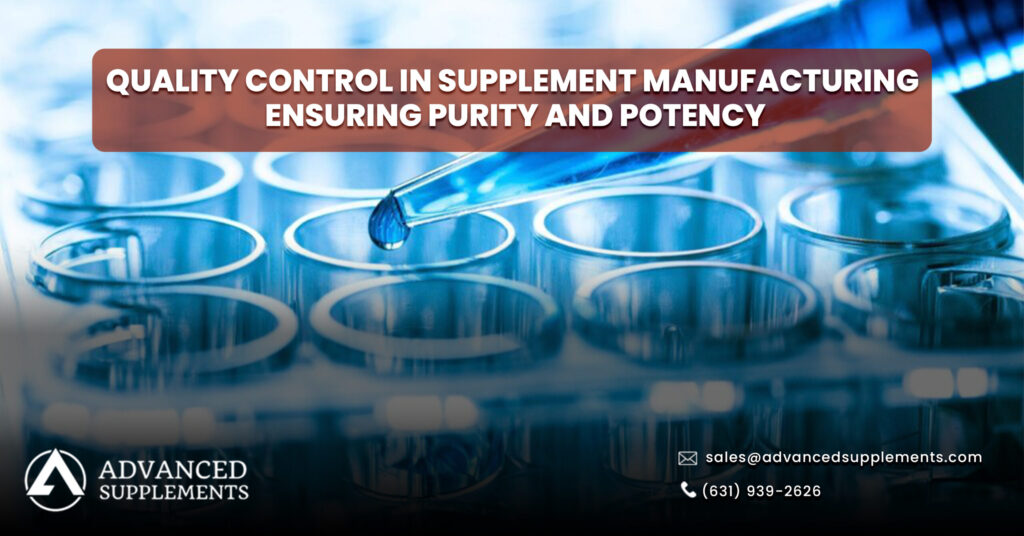
Ensuring supplement quality requires comprehensive testing, strict protocols, and regulatory compliance throughout manufacturing. This guide explains quality control measures that protect consumers and maintain product purity, potency, and safety standards.
GMP Requirements for Supplement Quality Control
Good Manufacturing Practices provide the foundation for quality control in the supplement industry. The FDA’s 21 CFR Part 111 regulations establish mandatory quality standards for dietary supplement manufacturers.
These regulations require manufacturers to establish and follow current good manufacturing practice to ensure supplement quality and proper packaging and labeling. Working with supplement manufacturers who maintain strict GMP compliance protects brands from regulatory issues and quality failures.
Third-party GMP certification from organizations like NSF International or USP provides independent verification that facilities meet quality standards. According to NSF certification data, certified facilities undergo comprehensive audits covering manufacturing processes, quality systems, and regulatory compliance annually. GMP covers facility sanitation, equipment maintenance, employee training, production controls, quality testing, and documentation.
Component Specification and Identity Testing
Component specifications establish quality standards for every ingredient entering production. According to 21 CFR 111.70, manufacturers must establish specifications covering identity, purity, strength, composition, and potential contaminants for each component.
Identity testing represents the most critical specification requirement. Under 21 CFR 111.75, manufacturers must test every dietary ingredient for identity before use in manufacturing. Relying solely on supplier Certificates of Analysis does not satisfy this requirement.
Testing methods must unequivocally differentiate each component from all others. Common identity testing methods include HPLC (High-Performance Liquid Chromatography), FTIR (Fourier Transform Infrared Spectroscopy), TLC (Thin Layer Chromatography), and organoleptic testing for botanical ingredients. Purity testing confirms ingredients meet quality standards without excessive contamination. Strength testing verifies ingredient potency matches specifications. Understanding how to find the right supplement manufacturer includes verifying their component testing capabilities.
Contaminant Testing and Safety Verification
Potential contaminants represent serious risks to consumer safety and product quality. Manufacturers must establish specifications limiting contaminants that may adulterate finished products.
Heavy metal testing screens for toxic elements including lead, mercury, cadmium, and arsenic. ICP-MS (Inductively Coupled Plasma Mass Spectrometry) provides accurate detection at parts-per-billion levels. Pesticide residue testing is particularly important for botanical and agricultural ingredients.
Microbiological testing ensures products remain free from harmful bacteria, yeast, mold, and pathogens. Testing includes total aerobic plate count, yeast and mold count, coliform count, and pathogen testing for Salmonella, E. coli, and Staphylococcus aureus. Physical contaminants like metal fragments, glass, or plastic require metal detectors, X-ray inspection systems, and visual examination protocols.
In-Process Quality Control and Monitoring
In-process controls monitor critical points during manufacturing where quality issues could arise. These controls detect problems early, preventing entire batches from failing specifications.
Master Manufacturing Records identify points requiring control to ensure quality. Batch Production Records document that specified controls are implemented during actual production. Weight checks verify accurate ingredient measurement during formulation. Blend uniformity testing confirms ingredients distribute evenly throughout mixtures before encapsulation.
Process validation demonstrates manufacturing processes consistently produce products meeting specifications. Environmental monitoring tracks temperature, humidity, and airborne particulates. Equipment calibration ensures processing equipment functions correctly. Regular calibration of scales, tablet presses, and analytical instruments maintains accuracy and reliability.
Finished Product Testing and Release Procedures
Finished product testing verifies supplements meet all specifications before release for distribution. This represents the final opportunity to catch quality issues before products reach consumers.
Manufacturers must verify finished products meet specifications for identity, purity, strength, composition, and potential contaminants. Identity testing confirms finished products contain expected ingredients in correct amounts. Potency testing measures active ingredient concentrations to verify label claims.
Dissolution and disintegration testing ensures tablets and capsules break down appropriately for nutrient absorption. USP standards specify dissolution testing methods and acceptance criteria. Understanding capsule supplement manufacturing processes reveals why dissolution testing matters for bioavailability. Stability testing evaluates how products change over time under various storage conditions, establishing appropriate expiration dates and storage instructions.
Documentation and Traceability Systems
Comprehensive documentation provides evidence of quality control execution and enables investigation when problems occur. The FDA emphasizes documentation review during facility inspections.
Batch production records document everything occurring during manufacturing including ingredient lot numbers, quantities used, processing conditions, in-process testing results, and deviations. These records enable complete traceability from raw materials through finished products to distribution.
Certificates of Analysis summarize testing performed on ingredients and finished products. Standard Operating Procedures provide written instructions for all quality-related activities. Change control systems evaluate and document changes to formulations, processes, or equipment. Deviation and CAPA systems address problems when they occur, investigating root causes and implementing preventive actions.
Third-Party Certification and Verification Programs
Independent certification programs provide additional quality assurance beyond basic GMP compliance. These voluntary programs subject manufacturers to enhanced scrutiny and testing.
USP Dietary Supplement Verification tests products against performance standards and verifies manufacturing according to FDA cGMPs. According to USP program requirements, products undergo facility audits, manufacturing documentation review, and laboratory testing for content accuracy and contaminant absence.
NSF International offers certifications including NSF/ANSI 455-2 for GMP compliance and NSF Certified for Sport for banned substance testing. Informed Sport and Informed Choice programs test products for banned substances prohibited in athletic competition. ConsumerLab independently tests supplements and publishes results comparing products.
Quality Control Challenges in Supplement Manufacturing
Several factors complicate quality control implementation, requiring specialized knowledge and systems to address effectively.
Botanical ingredients present unique challenges due to natural variability. Plants contain thousands of compounds that vary based on growing conditions, harvest timing, and processing methods. Standardization to marker compounds helps ensure consistency but requires sophisticated analytical methods.
Novel ingredients lacking established testing methods require method development and validation. Contract manufacturing arrangements divide quality responsibilities between brand owners and manufacturers. Clear quality agreements defining testing requirements prevent gaps in oversight. Understanding contract manufacturing vs contract packaging decisions includes quality control allocation.
Multi-ingredient formulations create analytical challenges when components interfere with testing. Resource limitations affect quality control capabilities, particularly for small manufacturers. Working with custom supplement manufacturer partners with robust quality systems benefits emerging brands.
Building Effective Quality Management Systems
Comprehensive quality management systems integrate quality control activities into coherent frameworks supporting continuous improvement.
Quality units must be independent from production with authority to review procedures, reject non-conforming materials, and investigate complaints. Risk assessment methodologies identify quality risks and prioritize controls. ICH Q9 provides quality risk management frameworks applicable to supplement manufacturing.
Supplier qualification programs evaluate ingredient suppliers before use. Audits verify supplier quality systems, testing capabilities, and GMP compliance. Internal audit programs systematically review quality system effectiveness. Management review meetings evaluate quality metrics, audit results, deviation trends, and customer complaints.
Regulatory Inspection Preparedness
FDA inspections can occur with little notice, making constant readiness essential. Facilities should maintain inspection-ready status rather than scrambling when FDA arrives.
The most frequently cited observations involve component and finished product specifications, identity testing, master manufacturing records, and batch production records. Proactive review of these areas prevents common compliance issues.
Mock inspections using FDA inspection guides help identify potential observations before real inspections. Employee training prepares staff to respond appropriately during inspections. Post-inspection CAPA implementation addresses observations promptly and thoroughly. Root cause analysis and comprehensive corrective actions demonstrate commitment to compliance.
Future Trends in Supplement Quality Control
Quality control continues evolving with technological advances and regulatory developments shaping future practices.
Analytical technology improvements enable faster, more sensitive testing. Portable testing devices allow real-time quality verification during production. Rapid microbiological methods reduce testing time from days to hours.
Data systems integration connects analytical instruments, manufacturing equipment, and quality databases. Electronic batch records and statistical process control enable real-time quality monitoring. Artificial intelligence and machine learning analyze quality data to predict problems before they occur. Blockchain technology provides immutable supply chain traceability.
Frequently Asked Questions
-
What are GMP requirements for supplement manufacturing?
GMP requirements under 21 CFR Part 111 mandate quality systems covering facilities, equipment, personnel, production controls, quality testing, documentation, and complaint handling. Manufacturers must establish specifications for all components and finished products, verify specifications through testing, and maintain comprehensive records documenting compliance.
-
Why must manufacturers test ingredient identity instead of relying on supplier certificates?
FDA regulations require independent identity testing because suppliers may provide inaccurate COAs, samples may be mislabeled, or cross-contamination could occur. Identity testing ensures the correct ingredients enter manufacturing, preventing potentially dangerous substitutions or contamination that could harm consumers.
-
What analytical methods are used for supplement quality testing?
Common methods include HPLC for ingredient identification and quantification, ICP-MS for heavy metal testing, microbiological culturing for contamination detection, FTIR for identity confirmation, dissolution testing for bioavailability verification, and organoleptic evaluation for botanical ingredient quality assessment.
-
How do third-party certifications differ from basic GMP compliance?
Basic GMP compliance means following FDA regulations, while third-party certifications like NSF or USP verification provide independent audits, enhanced testing requirements, and public disclosure of compliance. These voluntary programs offer additional consumer confidence and market differentiation.
-
What quality control documentation must supplement manufacturers maintain?
Required documentation includes master manufacturing records, batch production records, component and finished product specifications, testing methods and results, certificates of analysis, standard operating procedures, training records, equipment calibration logs, deviation investigations, and CAPA records for complete traceability.
-
How does quality control prevent supplement recalls and FDA warning letters?
Quality control prevents recalls by verifying ingredient identity, potency, and purity before production and release. Proper testing, batch records, deviation handling, and CAPA systems ensure compliance with 21 CFR Part 111, reducing FDA observations, warning letters, and costly product withdrawals.