

The protein supplement market exceeded $22 billion in 2024 as consumers seek convenient ways to meet daily protein requirements. The fundamental choice between whey protein and plant-based protein impacts muscle building, recovery, digestion, and long-term health outcomes significantly.
Recent research challenges old assumptions about protein quality and effectiveness. Understanding the complete picture helps you make informed decisions aligned with fitness goals, dietary preferences, and health priorities.
Get your custom protein formulas with Advance Supplements. Contact us today to create personalized whey or plant protein products for your brand, fast, reliable, and tailored to your needs.
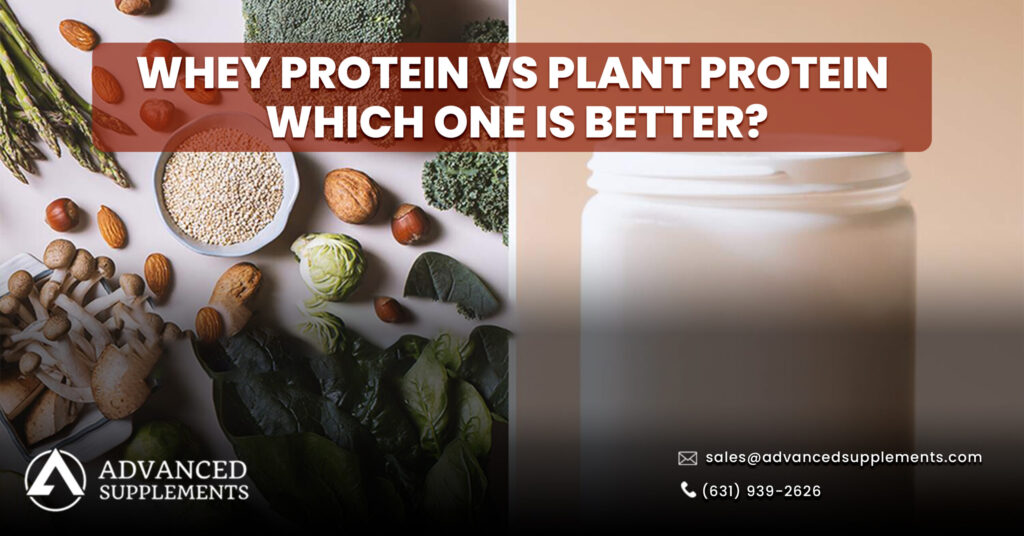
Whey protein delivers a complete amino acid profile with a PDCAAS score of 1.0 and faster absorption, making it ideal for post-workout recovery, though it contains lactose that causes digestive issues in about 65% of people. Plant protein blends like pea and rice combine to form complete amino acid profiles too, offering better digestibility, fiber, and sustainability, but usually cost more and need larger servings to match whey’s muscle-building effect. Both support similar muscle growth when protein and amino acid content are matched, so the better choice depends on digestion, budget, and dietary preference rather than effectiveness alone.
Understanding Whey Protein and Its Amino Acid Profile
Whey protein is derived from milk during cheese production. According to research from Healthline, whey protein is a complete protein containing all nine essential amino acids in optimal ratios for muscle growth.
The amino acid profile of whey protein closely matches what muscles need for repair and recovery. It contains 20-30 grams of protein per serving with high concentrations of branched-chain amino acids including leucine, isoleucine, and valine. Whey protein isolate contains approximately 12% leucine by weight, meaning a 23-gram serving provides about 2.8 grams of leucine. This amount meets the threshold of 2.5-3 grams needed to trigger maximum muscle protein synthesis.
Whey protein offers rapid absorption characteristics. The body digests whey protein quickly, with amino acid levels peaking in the bloodstream approximately 60-90 minutes after consumption. This makes whey particularly effective when consumed immediately after exercise when muscles are most receptive to nutrients.
Plant Protein Sources and Complete Amino Acid Profiles
Plant-based proteins come from various sources including peas, rice, soy, hemp, chia seeds, and fava beans. Individual plant proteins typically do not provide complete amino acid profiles, with most lacking sufficient amounts of one or more essential amino acids.
However, combining multiple plant protein sources creates complete amino acid profiles comparable to whey protein. According to Integris Health research, manufacturers blend pea protein with rice protein to create complementary profiles where each source provides amino acids the other lacks. Pea protein is rich in lysine but lower in methionine, while rice protein provides ample methionine but less lysine.
Soy protein stands alone as the only single-source plant protein considered complete. It contains all nine essential amino acids in adequate amounts. Plant protein absorption occurs more slowly compared to whey protein, providing steady amino acid availability over longer periods.
Digestibility and Allergy Considerations
Digestibility represents a critical factor because poorly digested protein provides less nutritional value regardless of amino acid content. The Protein Digestibility Corrected Amino Acid Score measures how well proteins are digested and used by the body.
Whey protein isolate achieves a PDCAAS score of 1.0, the highest possible rating, indicating nearly complete digestion and amino acid absorption. However, whey protein contains lactose and dairy proteins that cause digestive distress in many individuals. Approximately 65% of the global population experiences some degree of lactose intolerance after infancy. For these individuals, whey protein can cause bloating, gas, diarrhea, and abdominal discomfort.
Plant-based proteins are naturally lactose-free and easier on digestive systems for most people. Pea protein achieves a PDCAAS score of 0.89, while rice protein scores 0.83. While lower than whey protein, these scores still indicate good digestibility that meets nutritional needs effectively when consumed in adequate amounts. Plant proteins avoid common allergens associated with dairy products, making them suitable for individuals with milk allergies or those following vegan diets.
Muscle Building and Performance Effectiveness
Muscle growth requires adequate protein intake, strength training, and sufficient recovery time. The effectiveness of different protein sources depends on amino acid content, leucine concentration, and absorption timing.
Multiple studies comparing whey protein and plant-based protein show that both support muscle growth when consumed in equal amounts providing similar quantities of essential amino acids and BCAAs. Research shows whey and plant proteins promote comparable muscle hypertrophy when matched for protein and BCAA content.
However, practical differences emerge in real-world application. Whey protein’s higher leucine concentration means smaller servings trigger maximum muscle protein synthesis. A 25-gram serving of whey protein isolate provides sufficient leucine, while plant proteins may require 30-35 grams to reach the same leucine threshold. Post-workout recovery shows slight advantages for whey protein due to rapid absorption. Understanding how pre-workout supplements are made helps athletes optimize nutrition timing around training.
Strength gains appear comparable between whey and plant protein when total protein intake and training are controlled. While whey protein may produce slightly greater increases in muscle size in some studies, both protein types effectively support strength development and athletic performance.
Nutritional Composition Beyond Protein Content
Protein content alone does not tell the complete nutritional story. Additional nutrients, calories, and micronutrients differ significantly between whey and plant-based proteins.
Whey protein provides primarily protein with minimal carbohydrates and fats. A typical serving contains 20-25 grams of protein, 1-3 grams of carbohydrates, and 1-2 grams of fat. Whey protein also naturally contains small amounts of calcium, B-vitamins, and bioactive compounds like lactoferrin and immunoglobulins that support immune function.
Plant-based proteins come packaged with additional nutrients not found in whey protein. They contain dietary fiber that supports digestive health and promotes satiety. Hemp protein provides omega-3 and omega-6 fatty acids in favorable ratios for heart health, plus zinc, magnesium, iron, and fiber. Brown rice protein offers B-vitamins and minerals while being hypoallergenic and easily digested. Calorie content is similar between whey and plant proteins when comparing equal protein amounts.
Environmental Impact and Sustainability
Sustainability concerns increasingly influence consumer protein choices. The environmental footprint of protein production varies dramatically between animal-based and plant-based sources.
Whey protein production requires significant resources because it derives from dairy farming. Producing one kilogram of whey protein generates approximately 23 kilograms of carbon dioxide equivalent in greenhouse gas emissions. Water usage for dairy protein production is substantial, requiring approximately 1,000 liters of water per kilogram of whey protein.
Plant-based protein production shows significantly lower environmental impact. Producing one kilogram of pea protein generates approximately 0.4 kilograms of carbon dioxide equivalent, representing a 98% reduction in greenhouse gas emissions compared to whey protein. Pea protein requires approximately 60 liters of water per kilogram produced, representing 94% less water than whey protein. Working with supplement manufacturers who prioritize sustainability helps brands align with environmental goals.
Taste, Texture, and Mixability Differences
Palatability significantly affects supplement consistency and long-term adherence. Proteins that taste unpleasant or mix poorly get abandoned rather than consumed regularly.
Whey protein traditionally offers superior taste and texture due to its dairy origin. The natural creaminess of milk proteins creates smooth, pleasant-tasting shakes with minimal grittiness. Whey protein mixes easily in water, milk, or other liquids without clumping. Chocolate, vanilla, and strawberry whey proteins taste similar to milkshakes.
Plant-based proteins have historically struggled with taste and texture issues. Early plant protein powders tasted earthy, chalky, or bitter, with gritty textures. However, modern plant protein formulations have improved dramatically. Advanced processing techniques, better flavoring systems, and careful blending create plant proteins that taste considerably better. Texture remains slightly grittier for most plant proteins compared to whey protein’s smooth consistency.
Cost Comparison and Value Analysis
Price differences between whey and plant-based proteins influence purchasing decisions, especially for consumers using protein supplements daily over extended periods.
Whey protein concentrate typically costs $15-25 per pound depending on brand and quality. Whey protein isolate costs $20-35 per pound. These prices translate to approximately $0.60-1.40 per 25-gram serving.
Plant-based protein powders generally cost more than whey protein. Single-source plant proteins cost $20-30 per pound, while blended plant proteins cost $25-40 per pound. This translates to approximately $1.00-1.60 per 30-gram serving. The price premium reflects more complex processing and higher ingredient costs. Understanding variables that impact manufacturing costs helps explain price differences.
Which Protein Source Should You Choose?
Selecting between whey and plant-based protein depends on individual factors including dietary restrictions, fitness goals, digestive tolerance, and personal values.
Choose whey protein if you:
- Want maximum muscle growth and recovery speed
- Need the most cost-effective protein option
- Have no dairy allergies or lactose intolerance issues
- Prefer superior taste and texture in protein shakes
- Prioritize rapid absorption for post-workout nutrition
Choose plant-based protein if you:
- Follow vegan or vegetarian dietary patterns
- Experience digestive issues with dairy products
- Prioritize environmental sustainability
- Want additional nutrients like fiber and antioxidants
- Prefer sustained amino acid release throughout the day
Consider using both protein types if:
- You want nutritional diversity in protein sources
- Different situations call for different absorption speeds
- You enjoy variety in supplement flavors and formats
- Your budget allows for multiple protein options
Many successful athletes and fitness enthusiasts use both whey and plant proteins strategically. They might consume whey protein immediately post-workout for rapid recovery, then use plant protein for meals or snacks throughout the day. This approach combines the benefits of both protein types.
Regardless of which protein you choose, meeting total daily protein requirements matters more than protein source. Most active adults need 0.7-1.0 grams of protein per pound of body weight daily to support muscle maintenance and growth. Achieving this target through whole foods supplemented with quality protein powder delivers excellent results with either whey or plant-based options.
Frequently Asked Questions
Is whey protein better than plant protein for building muscle?
Whey protein has slight advantages for muscle growth due to higher leucine content and faster absorption. However, research shows plant protein blends with complete amino acids produce comparable muscle gains when consumed in adequate amounts providing 2.5-3 grams of leucine per serving.
Can plant protein provide enough amino acids for muscle recovery?
Yes, modern plant protein blends combining pea, rice, and other sources deliver complete amino acid profiles with all nine essential amino acids. While individual plant proteins may be incomplete, properly formulated blends match whey protein’s amino acid composition effectively for recovery.
Which protein is easier to digest for people with sensitive stomachs?
Plant-based proteins are generally easier to digest because they are lactose-free and contain fewer allergenic compounds. Whey protein can cause bloating, gas, and digestive discomfort in people with lactose intolerance or dairy sensitivities affecting approximately 65% of adults globally.
How much more does plant protein cost compared to whey protein?
Plant-based protein powders typically cost $25-40 per pound compared to $15-35 for whey protein. This represents approximately 20-50% higher cost per pound, though the difference narrows when comparing cost per gram of actual protein content between formulations.
Does plant protein taste as good as whey protein?
Modern plant protein formulations have dramatically improved taste and texture compared to earlier versions. While whey protein traditionally tastes creamier and smoother, high-quality plant protein blends now offer comparable palatability that many consumers find equally enjoyable when properly flavored.