

The global powder dietary supplements market is valued at $35.9 billion and predicted to grow at 7.7% CAGR to reach $75.2 billion by 2032. Protein powder represents the largest segment within this market, driven by increasing consumer awareness about fitness, muscle building, and convenient nutrition.
Understanding the protein powder manufacturing process is essential for brand owners looking to create high-quality products. This guide examines each manufacturing stage from raw material sourcing through final packaging, explaining how different processes affect product quality and consumer satisfaction.
Ready to manufacture premium protein powder for your brand? Advanced Supplements offers expert formulation, quality testing, and complete production solutions. Contact our team today to start your project!
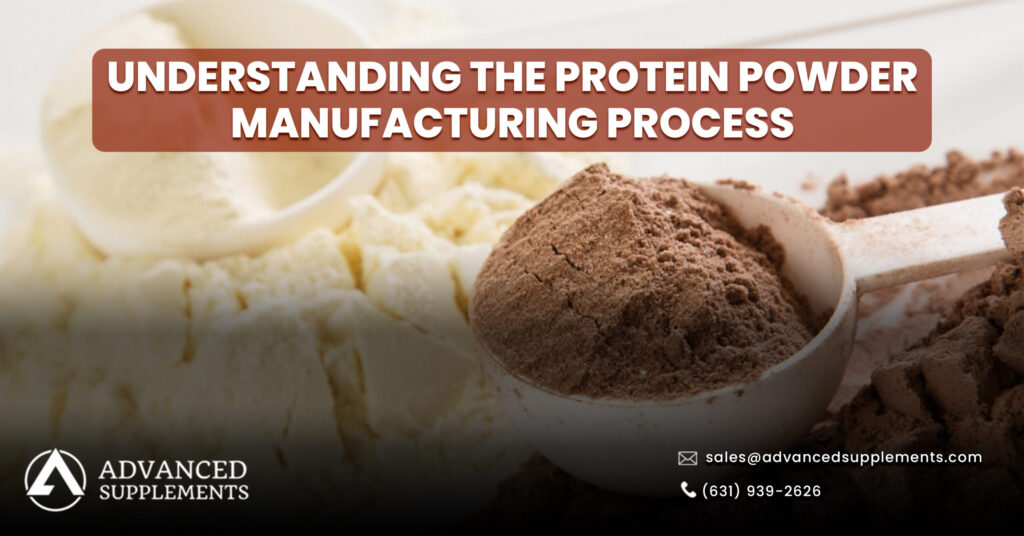
The protein powder manufacturing process transforms raw materials into high-quality supplements through extraction, filtration, and drying. Understanding this process helps brand owners create effective products that meet consumer demands for purity, potency, and safety.
Raw Material Sourcing for Protein Production
The protein powder manufacturing process begins with selecting high-quality raw materials that determine the final product’s nutritional profile. According to Healthline, protein sources fall into two main categories: animal-based and plant-based proteins.
Animal-based protein sources include whey and casein from dairy milk, egg white protein from eggs, and collagen from animal tissues. Whey protein is collected as a liquid byproduct during cheese production when milk separates into curds and whey. Plant-based protein sources include yellow split peas for pea protein, soybeans for soy protein, brown rice for rice protein, and hemp seeds for hemp protein.
The choice of raw material significantly influences protein digestibility, amino acid profile, allergen considerations, and environmental impact. Quality considerations during raw material selection include supplier GMP certification, ingredient purity testing, heavy metal screening, and traceability documentation. Working with professional supplement manufacturers ensures proper raw material sourcing and quality verification.
Whey Protein Extraction and Separation
Whey protein manufacturing follows a specific sequence starting at dairy farms. Cows are milked multiple times daily and the milk is immediately refrigerated to prevent spoilage. The milk is transported in insulated tanker trucks to processing facilities where protein extraction begins.
At the processing facility, milk undergoes pasteurization to eliminate potential pathogens and bacteria. The pasteurized milk is then introduced to enzymes that separate the liquid whey from solid casein curds. The casein is used for cheese-making while the liquid whey continues to protein manufacturing.
The liquid whey contains approximately 4-6 grams of protein per liter along with lactose, fat, and minerals. To concentrate the protein, the liquid whey undergoes filtration using microfiltration and ultrafiltration techniques. These membrane filtration methods physically separate protein molecules from lactose and fat based on molecular size. Ultrafiltration removes most fat and lactose, creating whey protein concentrate (WPC) with 70-85% protein content. For whey protein isolate (WPI) with 90%+ protein, additional ion exchange chromatography is used. Understanding whey vs plant protein differences helps consumers choose appropriate supplements.
Plant-Based Protein Extraction Methods
Plant-based protein manufacturing begins with harvesting protein-rich plants like peas, soybeans, or rice. The harvested plants are cleaned to remove dirt and unwanted materials before processing begins.
The dry extraction phase involves grinding the plants into fine flour or meal. This mechanical grinding breaks down plant cell walls to release protein content. For pea protein, yellow split peas are ground into fine flour that serves as the starting material for protein extraction.
The wet extraction phase separates protein from fiber, starch, and fats using water or enzymatic treatments. The plant flour is mixed with water to create a slurry where protein dissolves while fiber and starch are removed through separation techniques.
Filtration and concentration steps remove excess water and improve protein purity. Multiple filtration cycles produce plant protein concentrates (70-85% protein) or plant protein isolates (90%+ protein). Understanding the complete guide to powdered supplement manufacturing provides broader context for protein production.
Concentration and Purification Stages
After initial extraction, protein undergoes concentration and purification to increase protein content and remove unwanted substances. These processes directly affect the final product’s quality, digestibility, and nutritional value.
For whey protein, concentration involves removing water through evaporation under controlled temperatures. The liquid whey concentrate becomes more viscous as water is removed while protein concentration increases. Temperature control during evaporation prevents protein denaturation that would reduce biological activity.
Purification steps refine the protein solution to enhance purity. Additional filtration stages may be employed to remove residual lactose, fat, and minerals. Diafiltration adds water during ultrafiltration to wash away impurities while retaining protein molecules.
Crystallization removes lactose from whey protein concentrates, improving shelf stability and reducing issues for lactose-sensitive consumers. For plant proteins, purification involves removing anti-nutritional factors like phytates, trypsin inhibitors, and lectins that interfere with nutrient absorption.
Spray Drying and Powder Formation
Spray drying transforms concentrated liquid protein into the fine powder form consumers recognize. This critical step requires precise control to maintain protein integrity while removing moisture.
The spray drying process begins by atomizing the concentrated protein liquid into tiny droplets using high-pressure nozzles or spinning discs. These microscopic droplets are sprayed into a drying chamber where hot air rapidly evaporates water. Droplet size affects final powder characteristics including density, solubility, and texture.
Air temperature and flow rate are carefully controlled during spray drying. Inlet air temperatures typically range from 150-200°C, while outlet temperatures stay below 80°C to prevent protein degradation. The rapid drying process minimizes heat exposure time, preserving amino acid integrity and biological activity.
As water evaporates, protein particles form and fall to the bottom of the drying chamber where they are collected with moisture content around 3-5%. Working with experienced custom supplement manufacturer partners ensures proper spray drying parameters.
Flavoring and Formula Optimization
Flavoring represents a critical step because taste significantly impacts consumer acceptance and product success. Unflavored protein powder can have unpleasant tastes ranging from bland to bitter, especially for plant-based proteins.
Flavor system development involves selecting appropriate flavors that complement the protein source. Popular options include chocolate, vanilla, strawberry, and cookies and cream for sweet flavors. Natural flavors derive from plant or animal sources through physical processes like distillation. Artificial flavors are synthetically created compounds that mimic natural tastes.
Sweeteners enhance palatability without adding significant calories. Options include sugar, sucralose, stevia, monk fruit extract, and sugar alcohols. Bitter masking agents help neutralize unpleasant tastes from certain amino acids or plant compounds. Texture modifiers like lecithin, xanthan gum, or guar gum improve mixability and mouthfeel.
Additional functional ingredients may include digestive enzymes to improve protein absorption, vitamins and minerals for nutritional enhancement, and probiotics for gut health support. Understanding quality control in supplement manufacturing ensures flavor systems meet safety standards.
Quality Control and Testing Procedures
Comprehensive quality control throughout manufacturing ensures protein powders meet specifications for purity, potency, and safety. Testing occurs at multiple stages from raw materials through finished products.
Raw material testing verifies ingredient identity, purity, and quality before production begins. Identity testing uses methods like HPLC, FTIR, or DNA testing to confirm the correct protein source. Contaminant testing screens for heavy metals, pesticides, and microbiological hazards.
In-process testing monitors critical parameters during manufacturing. Protein concentration is verified after filtration and before drying. Moisture content is tracked during spray drying to ensure proper powder formation. Finished product testing comprehensively evaluates the final powder through protein content analysis using Kjeldahl method or Dumas combustion, amino acid profiling confirming complete amino acid spectrum, and microbiological testing ensuring products are free from harmful bacteria. Heavy metal testing screens for lead, mercury, cadmium, and arsenic contamination using ICP-MS for accurate detection.
Packaging and Final Product Preparation
Packaging protects protein powder from moisture, oxygen, and contamination while providing convenient consumer use. Automated filling and packaging lines ensure accurate serving sizes and consistent quality.
Common packaging formats include bottles and tubs for bulk protein powder, stand-up pouches as cost-effective alternatives, single-serve sachets for convenience and portion control, and stick packs for on-the-go consumption. Packaging materials must provide adequate moisture and oxygen barriers to maintain product freshness.
Multi-layer pouches combine plastic films with aluminum or metallized layers that block light, moisture, and oxygen. Bottles typically use HDPE or PET plastic with induction-sealed foil liners preventing contamination. Nitrogen flushing may be used during packaging to displace oxygen and extend shelf life.
Labels must comply with FDA regulations including nutrition facts panels, ingredient lists, allergen declarations, and structure-function claims. Understanding contract manufacturing vs contract packaging helps brands access development expertise.
Manufacturing Challenges and Solutions
Protein powder manufacturers face several technical challenges requiring expertise and specialized equipment to address effectively.
Maintaining protein quality during processing prevents denaturation that reduces bioavailability and effectiveness. Controlling temperatures during extraction, concentration, and drying preserves protein structure and biological activity. Cold-processing methods minimize heat exposure but increase production costs.
Achieving consistent flavor and mixability across batches requires precise ingredient measurement and thorough blending. Variations in raw material characteristics can affect final product taste and texture. Managing moisture content prevents clumping and maintains powder flow characteristics. Protein powders are hygroscopic, meaning they absorb moisture from air, so proper packaging and storage conditions protect products during distribution.
Future Trends in Protein Manufacturing
Protein powder manufacturing continues evolving with technological advances and changing consumer preferences shaping future innovations.
Sustainable sourcing and processing methods reduce environmental impact. Plant-based proteins generally require less water, land, and energy compared to dairy proteins. Manufacturers are exploring insect proteins and cultured proteins as next-generation sustainable sources.
Novel protein sources including algae, duckweed, and mycoprotein from fungi offer complete amino acid profiles with minimal environmental footprint. Enhanced bioavailability through enzymatic hydrolysis creates pre-digested protein peptides that absorb more rapidly. Clean-label formulations using minimal processing and natural ingredients appeal to health-conscious consumers.
Frequently Asked Questions
-
What is the main difference between whey protein concentrate and isolate?
Whey protein concentrate contains 70-85% protein with remaining lactose and fat, while isolate has 90%+ protein with minimal lactose and fat. Isolate undergoes additional filtration steps that increase protein purity but also increase cost and processing complexity.
-
How is plant-based protein powder made from peas?
Yellow split peas are ground into flour, mixed with water to create a slurry where protein dissolves, then filtered to remove fiber and starch. The protein solution is concentrated through membrane filtration and spray dried into powder form.
-
Why does spray drying not damage protein quality?
Spray drying exposes protein to high temperatures for only seconds due to rapid water evaporation from tiny droplets. This brief heat exposure, combined with controlled outlet temperatures below 80°C, preserves amino acid integrity and biological activity effectively.
-
What quality tests do protein powder manufacturers perform?
Manufacturers test for protein content, amino acid profile, heavy metals, pesticides, microbiological contamination, moisture content, and allergen presence. Third-party certifications add banned substance testing for sports nutrition products ensuring safety and label accuracy.
-
How long does the protein powder manufacturing process take?
Complete manufacturing from raw material receipt through finished packaged product typically takes 2-4 weeks depending on protein type, production volume, and testing requirements. This includes extraction, filtration, drying, flavoring, packaging, and quality verification steps.